How Fremantle Fuelled to First
Nineteen wins. Four losses. Seventy-six points. When the 2026 AFL home-and-away season wrapped up, Fremantle sat exactly where they'd been building toward all year — top of the ladder, minor premiers, with the best percentage in the competition at 137.2%. reeling off a club-record 14-game winning streak. It's the longest winning run by any WA-based club in AFL history.
Finals are next. But before we get there, it's worth looking at what it actually took to get the Dockers to first place, on and off the field.
The numbers behind #1
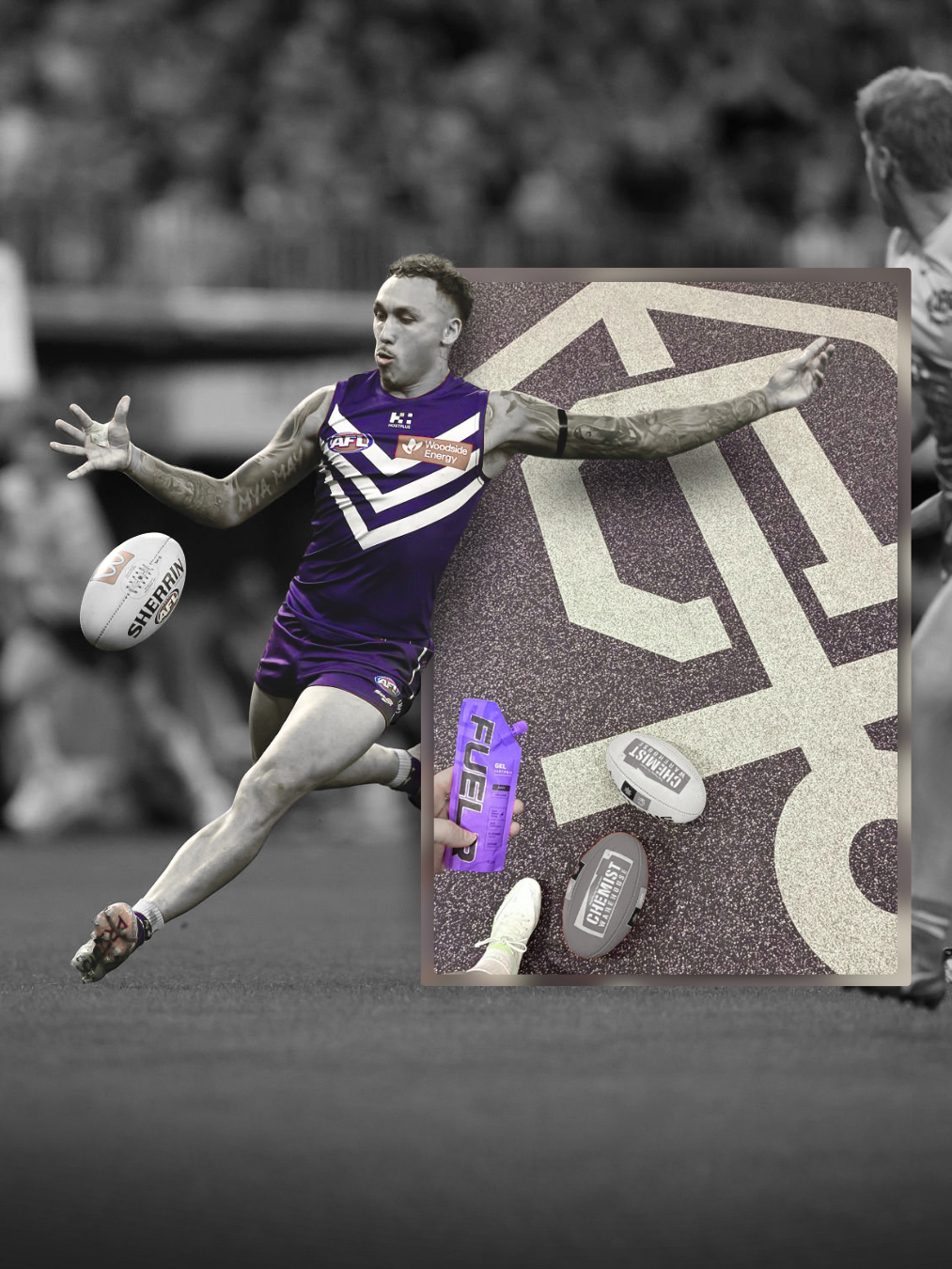
Over the course of the season, Fremantle's squad worked through 1,656 FUELR energy gels: 1,156 isotonic and 500 caffeinated, adding up to 28,900g of carbohydrate and 100,000mg of caffeine consumed across the campaign. That's the kind of consistent, session-by-session fuelling that underpins a 23-game season played at finals intensity from round one.
The split between the two gel types isn't arbitrary, it reflects two different physiological demands. AFL is a high-intensity, intermittent sport: players cover somewhere in the order of 12-15km a game, built from repeated bursts of sprinting rather than steady-state running, and by half-time muscle glycogen, the body's primary fuel source for that kind of effort is running down. Isotonic carbohydrate gels are formulated to match the body's own fluid concentration, which allows the carbohydrate to be absorbed quickly without pulling fluid into the gut, making them well suited to topping up energy stores at the main break without sitting heavy going into the second half. Caffeinated gels serve a different role: caffeine, taken at a modest dose, is well supported in the sports science literature for reducing the perception of effort and supporting alertness and reaction time, the kind of edge that matters most late in a contest, when fatigue affects decision-making as much as leg speed.
It's not flashy. It's not a single big moment. It's the accumulation of the right fuel, at the right time, week after week, which is exactly the story a minor premiership tells.
| Stat | Result |
|---|---|
| Total FUELR gels used | 1,656 |
| Isotonic gels | 1,156 |
| Caffeinated gels | 500 |
| Carbohydrate consumed (total) | 28,900g |
| Caffeine consumed (total) | 100,000mg |
The league's most relentless defence
Fremantle didn't top the ladder by simply outscoring everyone. They topped it by being the hardest team in the competition to score against. With just 1,666 points conceded across the season, the Dockers ran the tightest defence in the AFL — comfortably ahead of Adelaide (1,849) and Hawthorn (1,881) in second and third.
That's a defensive effort built on repeat pressure — the kind of relentless, contest-after-contest work rate that doesn't happen without players who can back up physically for four quarters, week after week.
| Rank | Team | Points against |
|---|---|---|
| 1 | Fremantle | 1,666 |
| 2 | Adelaide | 1,849 |
| 3 | Hawthorn | 1,881 |
Third-quarter kings
If there's one passage of play that defines Fremantle's season, it's the third quarter. The Dockers won the third term 18 times from 23 games — more than any other side in the league, ahead of Sydney (17) and Brisbane (16).
The third quarter is traditionally where finals are won and lost — where legs start to tire and the sides with something left in the tank pull away. Physiologically, it's also the quarter played immediately after the longest break in the game: the main break gives players roughly 20 minutes without the ball in play, which is exactly the window in which an isotonic gel can be absorbed and start replenishing glycogen before the third-quarter siren. A side that uses that break consistently — fuelling every player, every week, rather than leaving it to chance — gives itself a physical advantage precisely when the rest of the competition is starting to fade. Fremantle's third-quarter numbers this season line up with that idea: they didn't just win the term more often than anyone else, they did it as a repeatable pattern across 23 games, not a handful of good days.
| Rank | Team | Third-quarter wins |
|---|---|---|
| 1 | Fremantle | 18 |
| 2 | Sydney | 17 |
| 3 | Brisbane | 16 |
Fuelled to first. Not done yet.
A minor premiership is a genuine achievement — the best record across a 23-game season doesn't happen by accident. But for Fremantle, round 23 isn't the finish line. It's the platform.
The fuel strategy that got them here doesn't stop now. Finals are calling.